
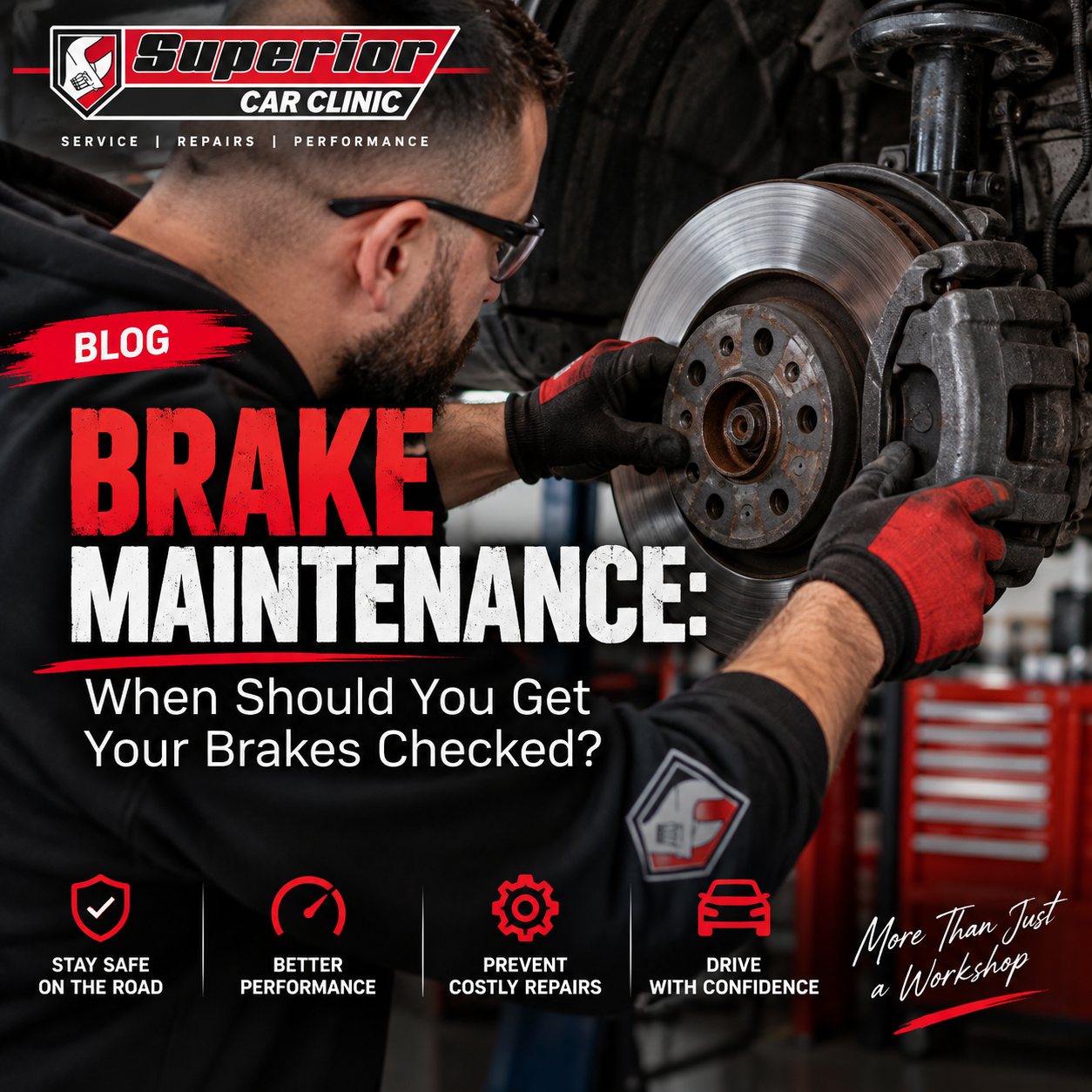
Your vehicle’s braking system is one of its most important safety features. Whether you’re driving around town, commuting to work or taking a long road trip, properly functioning brakes are essential for keeping you and other road users safe.
Regular brake maintenance and brake inspections can help identify worn or damaged components before they become a serious problem. But how often should you get your brakes checked, and what warning signs should you look out for?
How Often Should You Get Your Brakes Checked?
As a general rule, it’s recommended to have your brakes inspected at least once a year, or whenever your vehicle is due for a routine service. Your mechanic can check important components such as the brake pads, discs or rotors, calipers and brake fluid.
However, there isn’t a single mileage or timeframe that applies to every vehicle. Brake wear depends on factors such as your driving habits, road conditions, vehicle weight and how often you drive in heavy traffic.
If you do a lot of stop-start heavy traffic driving, drive in hilly areas or regularly carry heavy loads, your brakes may wear faster and require more frequent inspections.
Signs Your Brakes Need Checking
Your vehicle will often give you warning signs when there is a problem with the braking system. Don’t ignore these warning signs, as delaying a brake inspection or brake repair could compromise your safety.
Look out for:
- Squeaking or squealing: This can be a warning that your brake pads are becoming worn.
- Grinding noises: Grinding can indicate that brake pads are severely worn and may be allowing metal components to make contact.
- Vibrations when braking: Shaking or pulsing through the steering wheel or brake pedal may indicate an issue with the brake discs or other components.
- A soft or spongy brake pedal: This can indicate a problem that requires professional inspection.
- The vehicle pulling to one side: If your car moves left or right when braking, the braking system should be checked.
- A longer stopping distance: If your vehicle doesn’t stop as quickly as it normally does, have the brakes inspected as soon as possible.
- A brake warning light: Never ignore a brake warning light on your dashboard. Have the vehicle checked by a qualified professional.
Why Are Regular Brake Inspections Important?
Regular brake inspections can help detect wear and potential problems before they develop into costly repairs. For example, replacing worn brake pads at the appropriate time can help prevent further damage to other braking components.
A professional brake check can also provide peace of mind that your vehicle’s braking system is operating as it should.
Don’t Wait Until Your Brakes Fail
Brake problems should never be ignored. If you hear unusual noises, notice a change in braking performance or see a warning light on your dashboard, arrange a brake inspection as soon as possible.
Even if you haven’t noticed any problems, having your brakes checked during your regular vehicle service is an important part of preventative vehicle maintenance.
Safe driving starts with reliable brakes. If you’re unsure about the condition of your brakes, speak to a qualified mechanic and arrange a brake inspection.


