
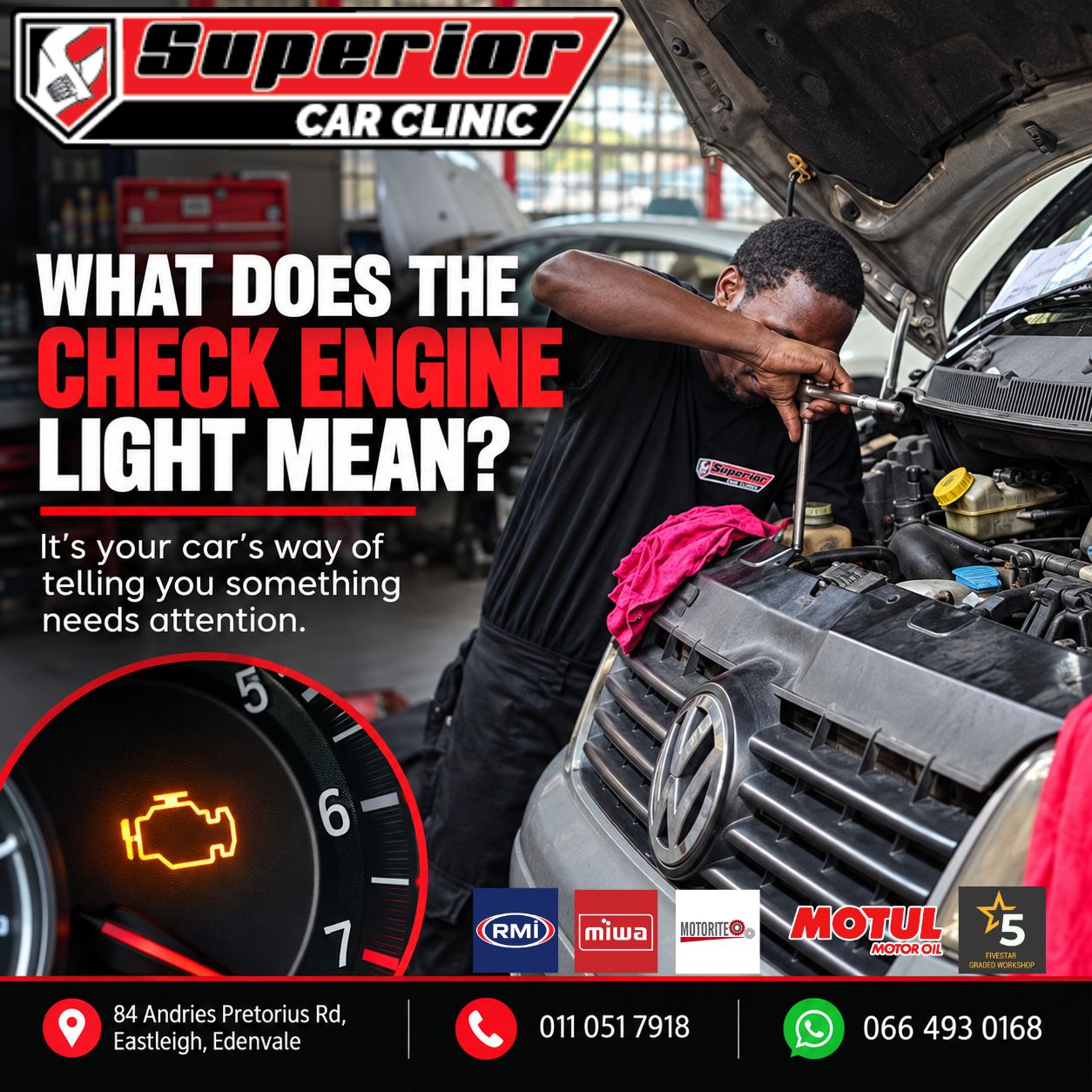
Seeing the check engine light appear on your dashboard can be worrying, especially if you are not sure what it means or whether it is safe to keep driving. The good news is that a check engine light does not always mean there is a major problem with your engine. It is your vehicle’s way of telling you that its onboard computer has detected something that needs attention. The cause could be something relatively simple, or it could indicate a more serious issue that requires professional diagnosis. In this guide, we explain what the check engine light means, what causes it to come on, whether you can continue driving, and what you should do when it appears. What is the check engine light? The check engine light is part of your vehicle’s onboard diagnostic system. It is sometimes referred to as the engine warning light or malfunction indicator lamp (MIL). When your vehicle detects a fault with a system that could affect the engine, emissions, fuel efficiency or vehicle operation, the onboard computer can switch on the warning light. The light is usually displayed as an amber or yellow engine-shaped symbol on the dashboard. Importantly, the check engine light can indicate many different problems. The light itself does not tell you exactly what has gone wrong. A diagnostic scan is generally needed to identify the fault code and determine the underlying cause. What does the check engine light mean? A check engine light means that your vehicle’s computer has detected a fault and stored a diagnostic trouble code (DTC). Some common causes include: Because there are so many possible causes, it is not possible to accurately diagnose the problem simply by looking at the warning light. What is the difference between a steady and flashing check engine light? One of the most important things to look at is whether the check engine light is steady or flashing. A steady check engine light A continuously illuminated check engine light generally means that the vehicle has detected a fault that should be investigated. If the car is driving normally and there are no other warning signs, you may be able to drive it carefully to a suitable workshop for diagnosis. However, it is best not to ignore the warning, particularly if the light remains on. Continuing to drive with an unresolved fault can sometimes lead to more expensive repairs or additional damage. A flashing check engine light A flashing check engine light can indicate a more serious fault. For example, a severe engine misfire can cause unburned fuel to enter the exhaust system, potentially damaging the catalytic converter. If the check engine light is flashing, especially if the vehicle is shaking, losing power, running roughly or producing unusual noises or smells, you should reduce the load on the engine and have the vehicle assessed as soon as it is safe to do so. Can I drive with the check engine light on? Whether you can safely continue driving depends on why the light has come on and how the vehicle is behaving. If the light is steady and the vehicle appears to be operating normally, it may be possible to drive a short distance to a workshop for a diagnostic check. However, you should take greater care if you notice other symptoms, such as: If the check engine light is flashing or the vehicle is behaving abnormally, continuing to drive could make the problem worse. Stop driving when it is safe to do so and seek professional assistance. What should I do when the check engine light comes on? Don’t panic, but don’t ignore it either. Here are some sensible steps to take: 1. Check whether the light is steady or flashing This is one of the first things to establish. A flashing light can indicate a more urgent problem than a steady light. 2. Pay attention to how your car is driving Notice whether the vehicle is running normally or whether you can feel a difference. Is the engine shaking? Has the vehicle lost power? Is it struggling to accelerate? Are there unusual smells or noises? These symptoms can provide useful information for a technician. 3. Check your fuel cap On some vehicles, a loose, damaged or incorrectly fitted fuel cap can trigger the check engine light. Make sure the fuel cap is properly tightened. If the warning light remains on, the vehicle should still be diagnosed rather than assuming the fuel cap was the cause. 4. Don’t simply clear the warning light A diagnostic scan can reveal the fault code that caused the warning light to appear. Clearing the code without identifying and repairing the underlying problem may only temporarily switch the warning light off. 5. Have the vehicle professionally diagnosed A proper diagnostic check can help identify the system responsible for the warning and determine what needs to be repaired. Why does my check engine light keep coming on? If the check engine light repeatedly comes back after being cleared, there is likely an underlying issue that has not been properly resolved. Simply resetting the light does not repair the fault. A technician can use diagnostic equipment to read the stored fault codes and carry out further testing to establish why the fault is occurring. Does a check engine light always mean an expensive repair? No. A check engine light can be triggered by a relatively minor issue, but it can also indicate a more significant mechanical or emissions-related problem. The cost depends entirely on the underlying cause. For example, a problem with a sensor or fuel-system component may require a very different repair from an issue affecting the catalytic converter or another major engine component. This is why getting the vehicle properly diagnosed is important before assuming the worst. Can a diagnostic scan tell me exactly what is wrong? A diagnostic scan can retrieve fault codes stored by the vehicle’s computer. These codes can provide valuable information about the system or component where a problem has been
How Often Should You Service Your Car?
Regular car servicing is one of the best ways to keep your vehicle safe, reliable and running efficiently. But how often should you service your car? The answer depends on several factors, including your vehicle’s age, mileage, manufacturer recommendations and how you use your car. At Superior Car Clinic, we recommend keeping up with your vehicle’s service schedule rather than waiting until something goes wrong. Regular maintenance can help identify potential problems early and may save you from expensive repairs further down the road. How Often Does a Car Need a Service? As a general guide, most cars should be serviced every 10,000–15,000 km or once a year, whichever comes first. However, this can vary between vehicles. Some newer cars have longer service intervals, while older vehicles may benefit from more frequent servicing. Your vehicle’s owner’s manual will provide the manufacturer’s recommended service interval. If you’re unsure when your car is due for a service, a professional inspection can help determine what maintenance your vehicle needs. What Does a Car Service Include? A car service is more than simply changing the oil. Depending on the type of service and your vehicle, checks and maintenance may include: Regular servicing gives technicians the opportunity to identify worn or damaged components before they develop into more serious problems. Signs Your Car May Be Due for a Service Even if you haven’t reached your recommended mileage, there are warning signs that your car may need attention. Look out for: If something doesn’t feel right, don’t ignore it. Getting the vehicle checked sooner can potentially prevent a small issue from becoming a major repair. Why Is Regular Car Servicing Important? Regular car servicing helps keep your vehicle performing at its best. It can improve reliability, maintain safety and help extend the life of important components. Servicing can also provide peace of mind. Knowing that your vehicle has been professionally checked means you can get on with your day without worrying about an avoidable mechanical problem. For vehicles that are still under a manufacturer’s service plan or warranty, it’s particularly important to follow the applicable servicing requirements. Book Your Car Service with Superior Car Clinic Not sure when your car is due for a service? Superior Car Clinic can help. Our team can assess your vehicle and advise you on the servicing and maintenance it requires. Whether your car is due for its regular service or you’re experiencing a problem, we’re here to help keep you safely on the road. Contact Superior Car Clinic today for a quote or to book your next car service. Don’t wait for a warning light or breakdown — regular servicing is an investment in the reliability and longevity of your car.
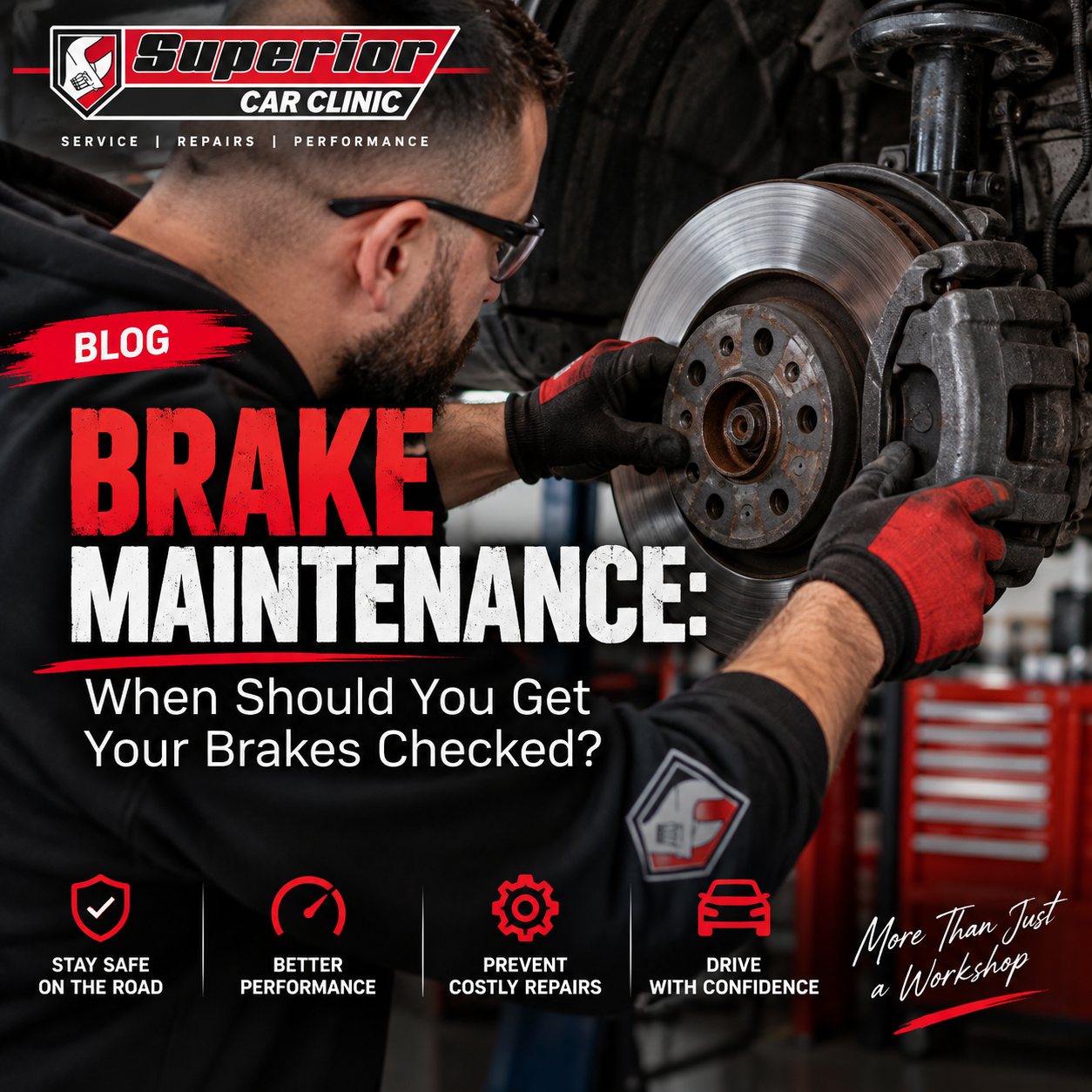
Brake Maintenance: When Should You Get Your Brakes Checked?
Your vehicle’s braking system is one of its most important safety features. Whether you’re driving around town, commuting to work or taking a long road trip, properly functioning brakes are essential for keeping you and other road users safe. Regular brake maintenance and brake inspections can help identify worn or damaged components before they become a serious problem. But how often should you get your brakes checked, and what warning signs should you look out for? How Often Should You Get Your Brakes Checked? As a general rule, it’s recommended to have your brakes inspected at least once a year, or whenever your vehicle is due for a routine service. Your mechanic can check important components such as the brake pads, discs or rotors, calipers and brake fluid. However, there isn’t a single mileage or timeframe that applies to every vehicle. Brake wear depends on factors such as your driving habits, road conditions, vehicle weight and how often you drive in heavy traffic. If you do a lot of stop-start heavy traffic driving, drive in hilly areas or regularly carry heavy loads, your brakes may wear faster and require more frequent inspections. Signs Your Brakes Need Checking Your vehicle will often give you warning signs when there is a problem with the braking system. Don’t ignore these warning signs, as delaying a brake inspection or brake repair could compromise your safety. Look out for: Why Are Regular Brake Inspections Important? Regular brake inspections can help detect wear and potential problems before they develop into costly repairs. For example, replacing worn brake pads at the appropriate time can help prevent further damage to other braking components. A professional brake check can also provide peace of mind that your vehicle’s braking system is operating as it should. Don’t Wait Until Your Brakes Fail Brake problems should never be ignored. If you hear unusual noises, notice a change in braking performance or see a warning light on your dashboard, arrange a brake inspection as soon as possible. Even if you haven’t noticed any problems, having your brakes checked during your regular vehicle service is an important part of preventative vehicle maintenance. Safe driving starts with reliable brakes. If you’re unsure about the condition of your brakes, speak to a qualified mechanic and arrange a brake inspection.


